Electric Vehicles Explained
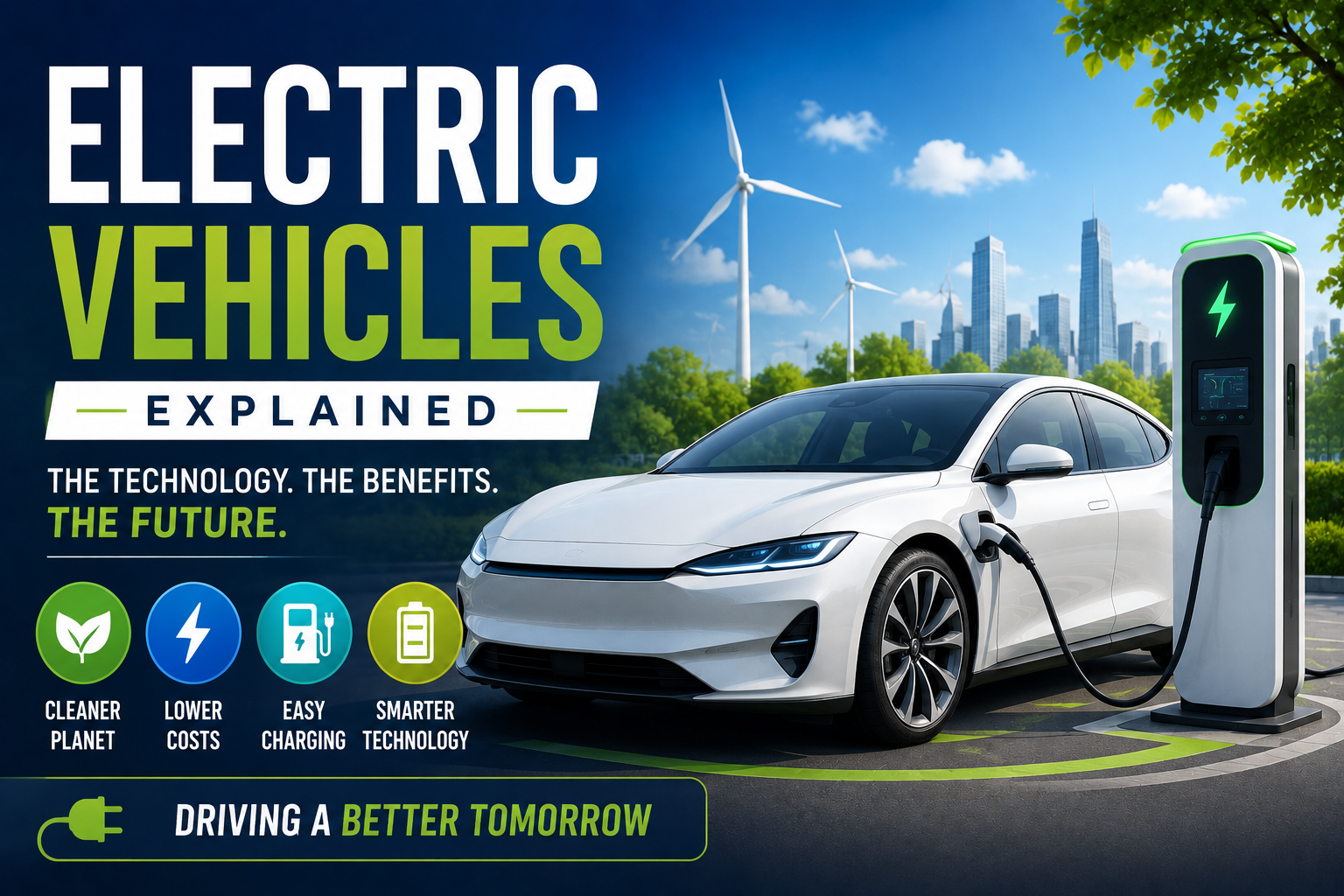
Electric vehicles (EVs) are transforming the future of transportation by offering a cleaner, quieter, and increasingly efficient alternative to traditional gasoline and diesel-powered cars. Advances in battery technology, charging infrastructure, and automotive engineering have made electric vehicles more practical and accessible than ever before, driving rapid adoption across the globe.
Governments, automakers, businesses, and consumers are investing heavily in electric mobility as they seek to reduce emissions, lower operating costs, and accelerate the transition toward more sustainable transportation. Whether you’re considering purchasing your first EV or simply want to understand how the technology works, learning the fundamentals can help you make informed decisions.
This guide explains what electric vehicles are, how they work, their different types, advantages, challenges, charging options, and the innovations shaping the future of electric mobility.
What Are Electric Vehicles?
An electric vehicle is a car, truck, bus, motorcycle, or other mode of transportation powered partially or entirely by electricity rather than a conventional internal combustion engine.
Instead of burning gasoline or diesel fuel, EVs use electric motors powered by rechargeable battery packs to move the vehicle.
Electric vehicles are designed to improve energy efficiency while reducing dependence on fossil fuels.
Why Electric Vehicles Matter
Transportation accounts for a significant share of global energy consumption and greenhouse gas emissions.
Electric vehicles can contribute to:
-
Lower tailpipe emissions
-
Reduced air pollution
-
Improved energy efficiency
-
Lower operating costs
-
Reduced dependence on fossil fuels
-
Quieter transportation
-
Greater use of renewable energy
-
Innovation in automotive technology
While environmental benefits depend partly on how electricity is generated, EVs generally offer greater energy efficiency than conventional vehicles.
How Electric Vehicles Work
Electric vehicles operate using a relatively simple drivetrain compared to traditional gasoline-powered vehicles.
The basic process includes:
-
Electricity is stored in a rechargeable battery.
-
The battery supplies power to the electric motor.
-
The motor converts electrical energy into mechanical motion.
-
The wheels propel the vehicle forward.
-
Regenerative braking captures some energy during deceleration and returns it to the battery.
Because electric motors contain fewer moving parts than combustion engines, maintenance requirements are often reduced.
Main Components of an Electric Vehicle
Several key components work together to power an EV.
Battery Pack
The battery stores electrical energy and is typically the largest and most expensive component.
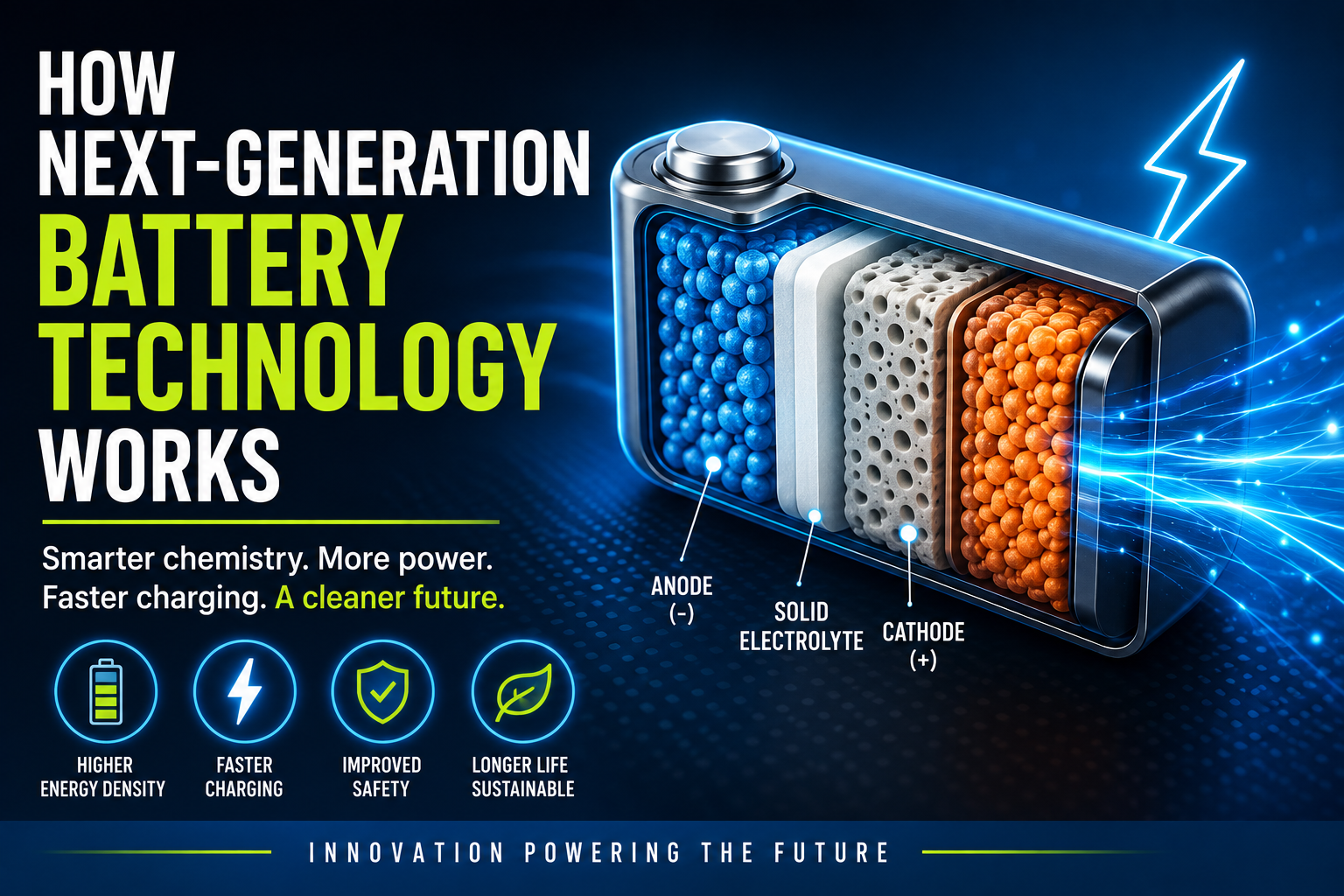
Modern EVs commonly use lithium-ion battery technology due to its high energy density and long lifespan.
Electric Motor
The motor converts electrical energy into movement, delivering smooth acceleration and instant torque.
Power Electronics
These systems regulate the flow of electricity between the battery and motor.
Charging Port
The charging port allows the battery to be replenished using compatible charging equipment.
Regenerative Braking System
This system recovers energy normally lost during braking and stores it back in the battery.
Types of Electric Vehicles
Electric mobility includes several vehicle categories.
Battery Electric Vehicles (BEVs)
Battery electric vehicles operate entirely on electricity and produce no tailpipe emissions.
Plug-in Hybrid Electric Vehicles (PHEVs)
Plug-in hybrids combine a rechargeable battery with a gasoline engine, allowing drivers to operate using electricity for shorter distances while retaining fuel-powered capability for longer trips.
Hybrid Electric Vehicles (HEVs)
Traditional hybrids use both an electric motor and gasoline engine, but the battery is charged primarily through regenerative braking and the engine rather than external charging.
Fuel Cell Electric Vehicles (FCEVs)
Fuel cell vehicles generate electricity using hydrogen fuel cells, emitting only water vapor during operation.
Advantages of Electric Vehicles
EVs offer several benefits compared to conventional vehicles.
Lower Operating Costs
Electricity often costs less than gasoline on a per-mile basis, and maintenance expenses may also be lower.
Reduced Maintenance
Without components such as engine oil, spark plugs, or complex transmissions, many maintenance requirements are simplified.
Quiet Operation
Electric motors operate with significantly less noise than internal combustion engines.
Instant Torque
Electric motors deliver maximum torque almost immediately, providing smooth and responsive acceleration.
Improved Energy Efficiency
Electric drivetrains convert a greater percentage of stored energy into motion compared to gasoline engines.
Charging Electric Vehicles
Charging options vary depending on location and available equipment.
Home Charging
Many EV owners charge overnight using residential charging equipment.
Public Charging Stations
Public chargers are increasingly available at shopping centers, workplaces, parking facilities, hotels, and highways.
Fast Charging
High-speed charging stations can significantly reduce charging time, making long-distance travel more convenient.
For a broader explanation of how different charging systems work, including the technologies used to transfer energy into batteries, see the Complete Guide to Charging Technology.
Charging speed depends on factors including:
-
Charger power
-
Battery capacity
-
Vehicle compatibility
-
Battery temperature
-
Current state of charge
Battery Range
Driving range refers to how far an electric vehicle can travel before requiring a recharge.
Range depends on several factors:
-
Battery size
-
Driving speed
-
Weather conditions
-
Terrain
-
Vehicle weight
-
Tire pressure
-
Use of heating or air conditioning
-
Driving habits
Battery technology continues to improve, enabling longer driving ranges in newer models.
Common Concerns About EVs
Although electric vehicles have become increasingly practical, some concerns remain.
Charging Availability
Charging infrastructure continues expanding, but availability varies by region.
Charging Time
Recharging generally takes longer than refueling a gasoline vehicle, although fast-charging technology continues to improve.
Battery Cost
Battery replacement can be expensive, though batteries are designed to last many years under normal use.
Cold Weather Performance
Extreme temperatures may temporarily reduce driving range and charging efficiency.
Manufacturers continue improving battery management systems to address these challenges.
Environmental Considerations
Electric vehicles produce no tailpipe emissions during operation.
Their overall environmental impact depends on factors such as:
-
Electricity generation sources
-
Battery manufacturing
-
Recycling practices
-
Vehicle lifespan
-
Energy efficiency
As renewable energy adoption increases, the environmental benefits of electric transportation may continue to improve.
Smart Features in Modern EVs
Many electric vehicles include advanced digital technologies.
Common features include:
-
Smartphone integration
-
Over-the-air software updates
-
Driver assistance systems
-
Route planning
-
Battery monitoring
-
Remote climate control
-
Charging management
-
Connected navigation
Software plays an increasingly important role in enhancing vehicle performance and convenience.
The Future of Electric Vehicles
Rapid innovation continues reshaping the electric vehicle industry.
Emerging developments include:
-
Solid-state batteries
-
Faster charging technologies
-
Longer driving ranges
-
Vehicle-to-grid (V2G) energy systems
-
Wireless charging
-
Autonomous driving technologies
-
Artificial intelligence-assisted energy management
-
Expanded charging infrastructure
Advances in autonomous driving are particularly important because electric vehicles are becoming part of a broader transformation in transportation. For a deeper explanation of the sensors, software, artificial intelligence, and control systems involved, see How Self-Driving Cars Work.
These advances aim to improve affordability, convenience, and overall performance.
Electric Vehicles and Smart Cities
Electric transportation is becoming an important part of future urban planning.
Potential benefits include:
-
Reduced urban air pollution
-
Lower traffic noise
-
Integration with renewable energy
-
Smart charging networks
-
Improved energy efficiency
-
Sustainable public transportation
Governments and city planners continue investing in infrastructure that supports growing EV adoption.
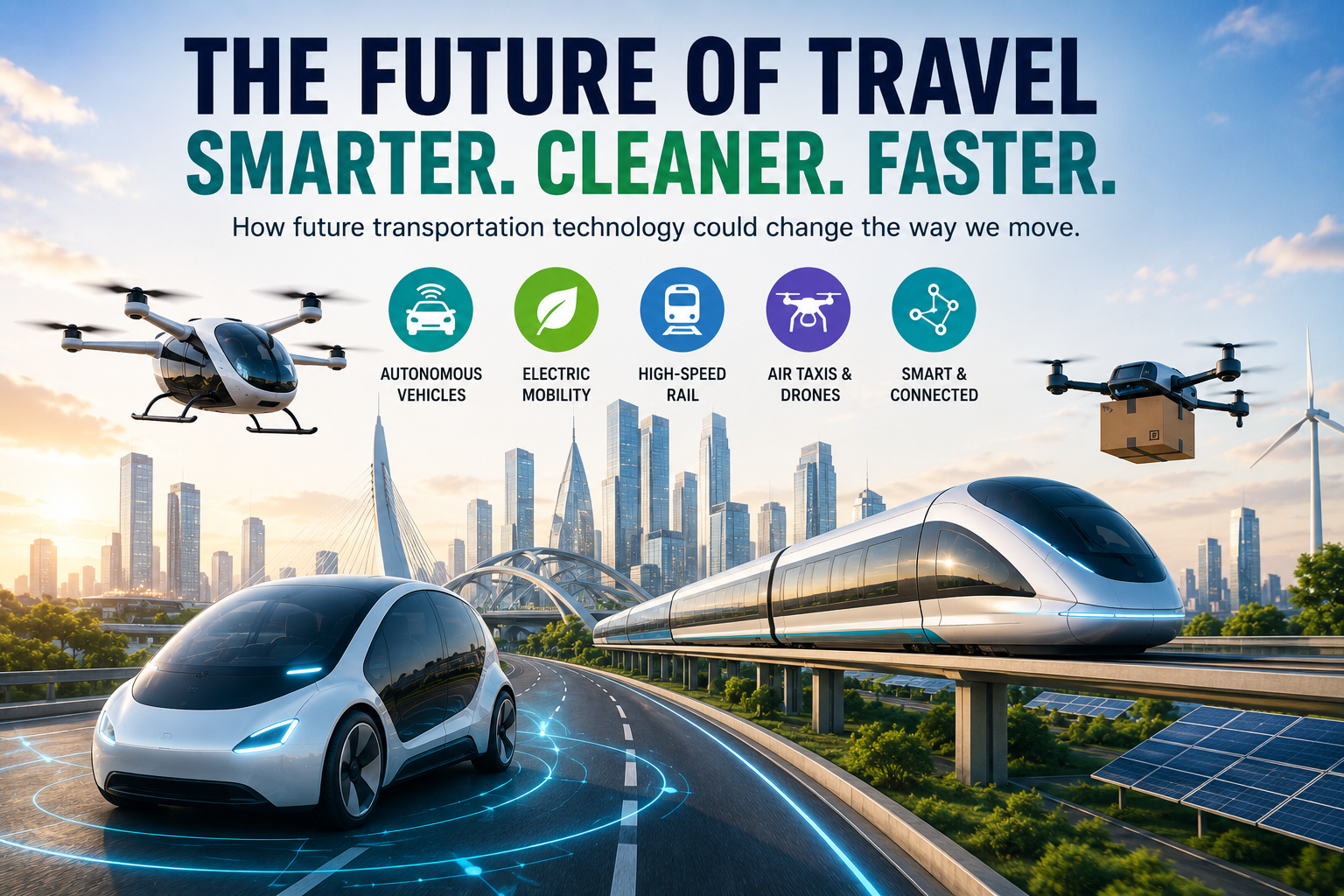
Electric vehicles are also part of a much broader shift toward connected and intelligent transportation. How Future Transportation Technology Could Change Travel explores how autonomous vehicles, connected infrastructure, and other emerging technologies could change the way people and goods move.
Tips for First-Time EV Buyers
If you’re considering purchasing an electric vehicle:
-
Evaluate your daily driving distance.
-
Research available charging options.
-
Compare battery ranges.
-
Understand charging times.
-
Consider total ownership costs.
-
Explore available incentives where applicable.
-
Learn about battery warranty coverage.
-
Test drive multiple models.
Choosing the right EV depends on your driving habits, budget, and charging accessibility.
Final Thoughts
Electric vehicles are reshaping the future of transportation by combining innovative engineering, digital technology, and improved energy efficiency. As battery technology advances and charging infrastructure expands, electric vehicles are becoming an increasingly practical choice for everyday drivers, businesses, and public transportation systems alike.
While challenges such as charging availability and battery costs continue to evolve, ongoing innovation is steadily improving performance, affordability, and convenience. Whether your interest lies in environmental sustainability, lower operating costs, or cutting-edge automotive technology, understanding electric vehicles provides valuable insight into one of the fastest-growing sectors of the global transportation industry.