Online Shopping Guide
Online shopping has transformed the way people purchase products and services, offering unparalleled convenience, competitive pricing, and access to millions of items from retailers around the world. From everyday household essentials and electronics to clothing, groceries, and digital subscriptions, consumers can compare products, read reviews, and complete purchases with just a few clicks.
As e-commerce continues to grow, shoppers have more choices than ever before. However, making informed purchasing decisions requires understanding how to compare products, identify trustworthy sellers, recognize genuine reviews, and protect personal information. Smart online shopping isn’t just about finding the lowest price—it’s about getting the best overall value while staying safe.
This guide explains how online shopping works, how to compare products effectively, identify reliable retailers, avoid common scams, and make confident purchasing decisions.
What Is Online Shopping?
Online shopping is the process of purchasing products or services through websites or mobile applications over the internet.
Consumers can shop for:
-
Electronics
-
Clothing
-
Home appliances
-
Groceries
-
Furniture
-
Beauty products
-
Books
-
Digital services
Most online stores allow customers to browse products, compare prices, complete secure payments, and have purchases delivered directly to their homes.
Why Online Shopping Matters
E-commerce has become an important part of everyday life.
Online shopping offers:
-
Greater convenience
-
Wider product selection
-
Competitive pricing
-
Easy price comparisons
-
Customer reviews
-
Home delivery
-
Time savings
-
Access to global retailers
These benefits have made online shopping increasingly popular among consumers worldwide.
Benefits of Online Shopping
Shopping online provides several advantages over traditional retail.
Key benefits include:
-
Shop anytime
-
Compare multiple products quickly
-
Access exclusive online deals
-
Read customer reviews
-
Save travel time
-
Track orders easily
-
Discover new brands
-
Enjoy doorstep delivery
Many retailers also offer flexible return policies and multiple payment options.
How to Choose a Reliable Retailer
Before making a purchase, evaluate the retailer’s credibility.
Look for:
-
Secure website (HTTPS)
-
Clear contact information
-
Transparent return policy
-
Verified customer reviews
-
Company history
-
Secure payment methods
-
Responsive customer support
-
Reasonable shipping policies
Buying from reputable retailers helps reduce the risk of fraud.
Compare Products Carefully
The best purchase isn’t always the cheapest one.
Compare products based on:
-
Features
-
Build quality
-
Performance
-
Warranty
-
Customer reviews
-
Brand reputation
-
Long-term value
-
Total ownership cost
Taking time to compare options often leads to better buying decisions. A useful framework for this process is The Complete Guide to Choosing the Right Products.
Read Customer Reviews
Reviews provide valuable insights from real customers.
Pay attention to:
-
Overall ratings
-
Verified purchases
-
Detailed experiences
-
Product photos
-
Common complaints
-
Long-term reliability
-
Customer support experiences
-
Recent reviews
Looking for consistent patterns is often more useful than focusing on a single review. Learning how to evaluate reviews more carefully can help you How to Read Product Reviews Like an Expert.
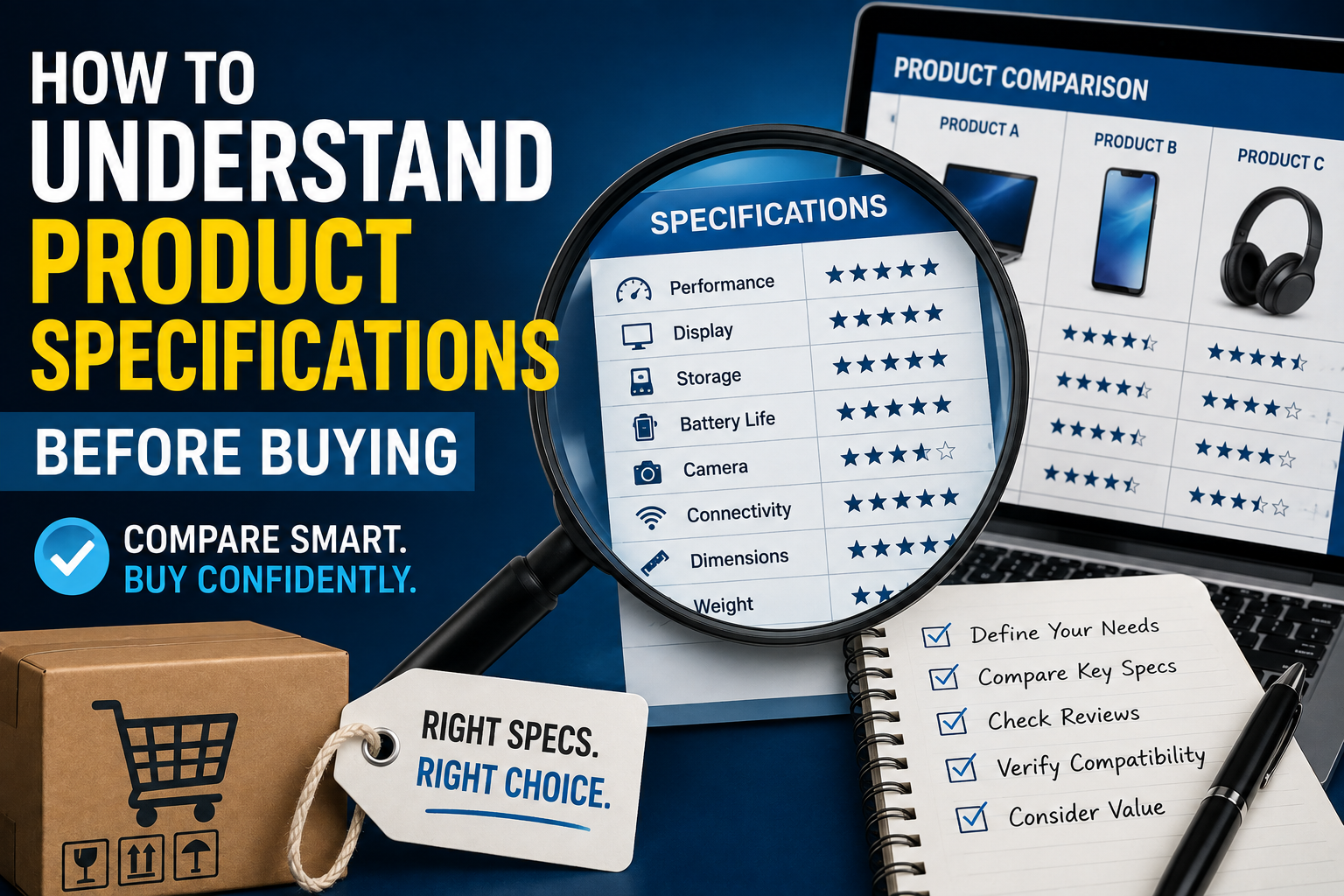
Understand Product Specifications
Specifications help determine whether a product meets your needs.
Common details include:
-
Dimensions
-
Materials
-
Storage capacity
-
Compatibility
-
Battery life
-
Performance
-
Weight
-
Included accessories
Always verify specifications before placing an order. For a more detailed explanation of how to interpret technical information, see How to Understand Product Specifications Before Buying.
Compare Prices
Prices can vary significantly between retailers.
When comparing prices, consider:
-
Product cost
-
Shipping fees
-
Taxes
-
Discounts
-
Coupons
-
Membership benefits
-
Warranty coverage
-
Return costs
The lowest advertised price may not always represent the best overall value. Understanding how pricing relates to perceived value and product quality can also help shoppers assess How Product Pricing Works and What Determines Whether a Product Is Worth Its Price.
Watch for Deals and Discounts
Many retailers regularly offer promotions.
Popular savings opportunities include:
-
Seasonal sales
-
Clearance events
-
Coupon codes
-
Bundle offers
-
Cashback programs
-
Loyalty rewards
-
Student discounts
-
Free shipping promotions
However, avoid making purchases solely because an item appears heavily discounted.
Secure Payment Methods
Using trusted payment methods improves financial security.
Popular options include:
-
Credit cards
-
Debit cards
-
Digital wallets
-
Bank transfers
-
Buy now, pay later services
-
Gift cards
Whenever possible, avoid sending payment through unfamiliar or unsecured methods.
Protect Your Personal Information
Online privacy is an important part of safe shopping.
Good security practices include:
-
Creating strong passwords
-
Enabling two-factor authentication
-
Avoiding public Wi-Fi for purchases
-
Monitoring account activity
-
Reviewing privacy settings
-
Keeping software updated
-
Using secure payment gateways
-
Avoiding suspicious links
Protecting personal information reduces the risk of identity theft and fraud.
Shipping and Delivery
Understanding delivery options helps avoid surprises.
Consider:
-
Estimated delivery dates
-
Shipping costs
-
Tracking availability
-
Delivery insurance
-
Signature requirements
-
International shipping
-
Customs fees
-
Pickup options
Always review shipping information before completing your purchase.
Returns and Refunds
Before buying, understand the retailer’s return policy.
Check for:
-
Return window
-
Refund process
-
Exchange options
-
Restocking fees
-
Return shipping costs
-
Product condition requirements
-
Warranty coverage
-
Customer service contact details
A clear return policy provides greater confidence when shopping online.
Common Online Shopping Scams
Cybercriminals often target online shoppers.
Be cautious of:
-
Fake shopping websites
-
Counterfeit products
-
Unrealistic discounts
-
Phishing emails
-
Fake delivery notifications
-
Unverified sellers
-
Payment scams
-
Social media fraud
If an offer seems unusually good, verify its authenticity before purchasing.
Mobile Shopping Apps
Many consumers now shop primarily through mobile apps.
Benefits include:
-
Faster checkout
-
Personalized recommendations
-
Order tracking
-
Push notifications
-
Mobile-exclusive offers
-
Digital payment integration
-
Saved wish lists
-
Easy account management
Official retailer apps often provide the most secure shopping experience.
Common Online Shopping Myths
Several misconceptions surround online buying.
Myth: The Cheapest Product Is Always the Best Deal
Quality, warranty, and customer support are just as important as price.
Myth: All Customer Reviews Are Genuine
Some reviews may be misleading or manipulated, making it important to look for verified purchases and detailed feedback. Shoppers can learn more about this problem in How to Identify Biased Product Reviews.
Myth: Online Shopping Is Always Risky
Shopping from reputable retailers using secure payment methods is generally safe.
Myth: Brand Names Guarantee the Best Product
Many lesser-known brands offer excellent quality and value, depending on the product category.
Tips for Smarter Online Shopping
Improve your shopping experience by:
-
Comparing multiple retailers.
-
Reading verified customer reviews.
-
Checking return policies.
-
Reviewing product specifications carefully.
-
Using secure payment methods.
-
Watching for hidden fees.
-
Monitoring delivery updates.
-
Saving receipts and order confirmations.
-
Avoiding impulse purchases.
-
Shopping from trusted websites.
These habits can help you make more informed purchasing decisions.
The Future of Online Shopping
E-commerce continues evolving through advances in technology.
Emerging trends include:
-
AI-powered product recommendations
-
Augmented reality product previews
-
Voice shopping
-
Personalized pricing
-
Faster delivery services
-
Sustainable packaging
-
Automated customer support
-
Smarter product comparisons
These innovations are expected to make online shopping even more convenient and personalized.
Final Thoughts
Online shopping has become an essential part of modern life, offering consumers convenience, variety, and access to competitive prices across countless product categories. By learning how to compare products, evaluate retailers, read customer reviews, and protect personal information, shoppers can make confident purchasing decisions while minimizing risks.
Whether buying everyday essentials or high-value electronics, informed online shopping is about balancing price, quality, security, and long-term value. Developing smart shopping habits helps ensure a safer, more enjoyable, and more rewarding e-commerce experience.