How Computer and Mobile Device Security Protects Endpoints
Computers and mobile devices have become some of the most important gateways to digital services. People use laptops to access company systems, smartphones to manage bank accounts, tablets to store personal information, and connected devices to communicate with cloud applications.
That convenience also makes these devices attractive targets for cybercriminals.
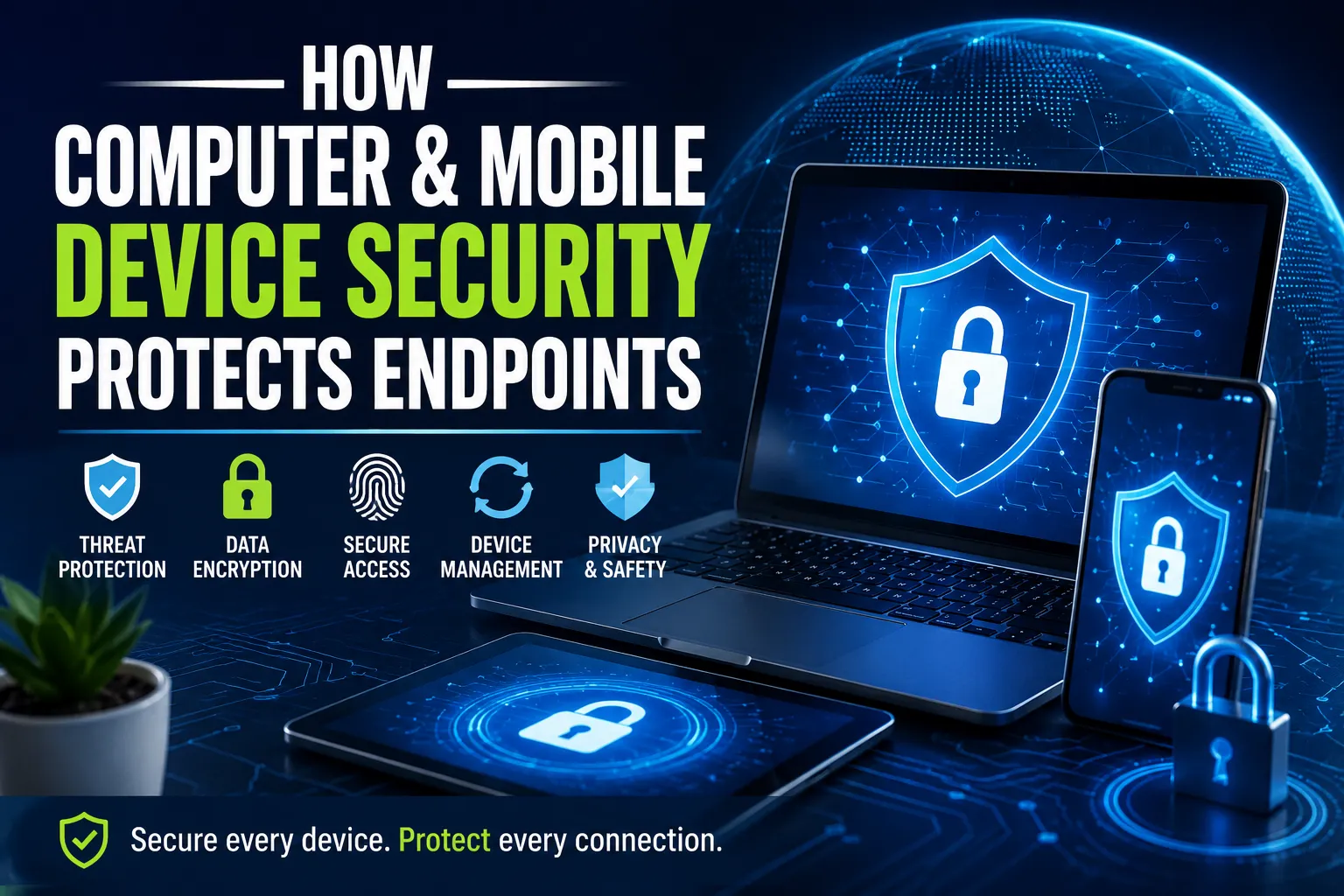
Endpoint security is the collection of technologies, policies, and practices used to protect individual devices that connect to a network or digital service. These devices are known as endpoints and can include desktop computers, laptops, smartphones, tablets, servers, and other connected equipment.
Endpoint security is one part of a broader cybersecurity strategy. To understand how endpoint protection fits into an organization’s overall defense, see the Ultimate Guide to Business Cybersecurity.
Understanding how endpoint security works is increasingly important because protecting a network is no longer enough. A compromised laptop or smartphone can provide an attacker with access to accounts, sensitive information, applications, and sometimes an entire organizational environment.
What Is an Endpoint?
An endpoint is a device that connects to a network, application, or computing environment.
Common examples include:
- Desktop computers
- Laptops
- Smartphones
- Tablets
- Workstations
- Servers
- Point-of-sale devices
- Internet-connected devices
- Some specialized business equipment
In a personal environment, a smartphone and laptop can both be considered endpoints.
In a business environment, the number of endpoints can be much larger because employees may use company computers, mobile phones, tablets, remote-work equipment, and other connected hardware.
Each endpoint represents a potential entry point into a digital environment. If an attacker successfully compromises one device, that endpoint may become a starting point for stealing information, accessing accounts, installing malware, or attempting to move deeper into an organization’s systems.
What Is Endpoint Security?
Endpoint security focuses on preventing, detecting, investigating, and responding to threats targeting individual devices.
Traditional cybersecurity often concentrated heavily on protecting the network perimeter. Modern environments are more distributed, however, with employees working remotely, cloud applications replacing on-premises systems, and organizations supporting many different types of devices.
Endpoint security therefore adds another layer of protection directly around the devices being used.
A comprehensive endpoint security strategy can include:
- Antivirus and malware protection
- Firewalls
- Device encryption
- Secure authentication
- Software updates
- Application controls
- Threat detection
- Security monitoring
- Data-loss prevention
- Device management
- Remote security controls
The exact combination depends on the device, operating system, user, and security requirements.
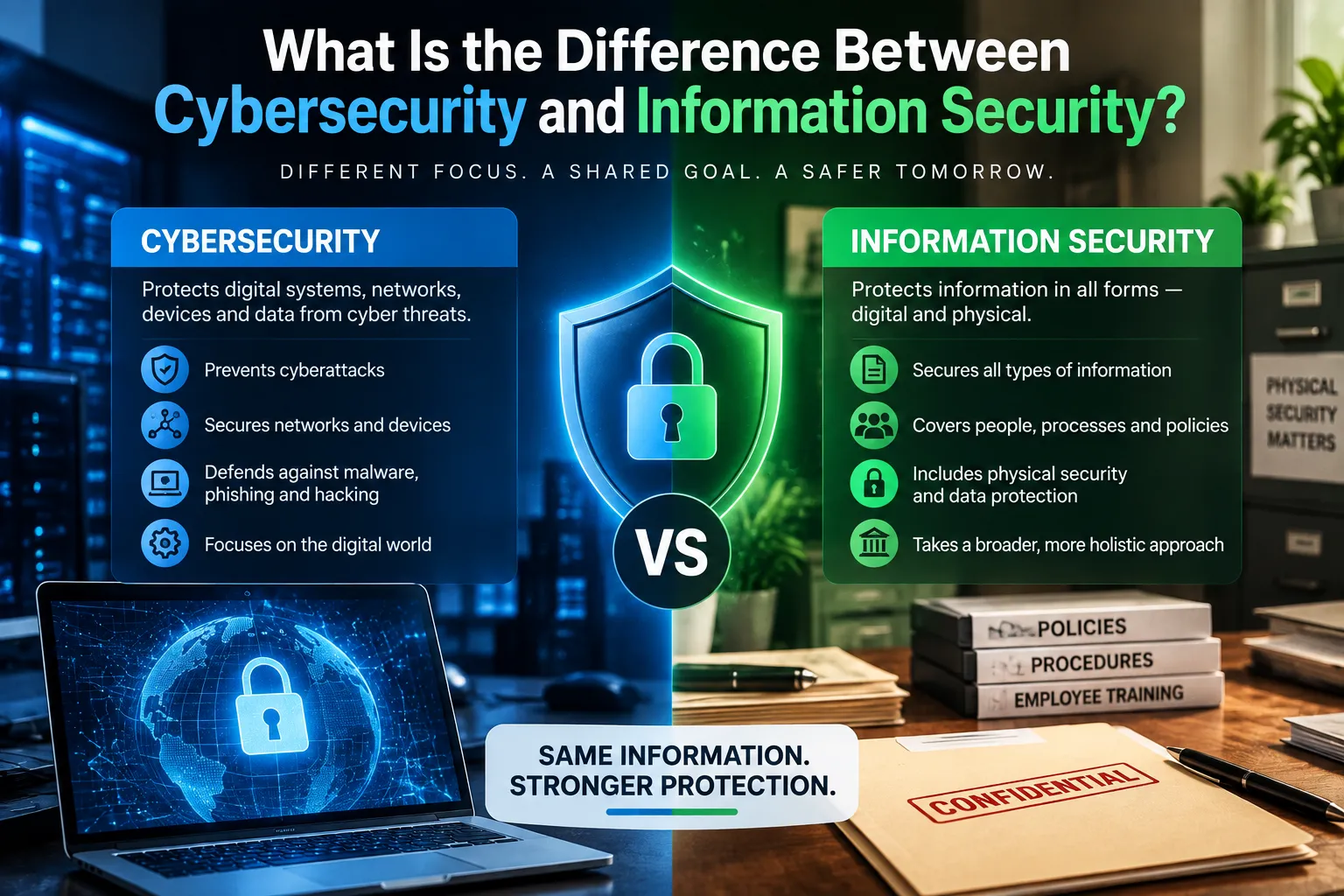
Endpoint security also overlaps with other cybersecurity disciplines. For example, software security helps address vulnerabilities in applications, while endpoint security focuses on protecting the devices on which those applications operate.
Why Are Endpoints Frequent Targets?
Endpoints are attractive to attackers because they are where people interact directly with digital systems.
A criminal may attempt to compromise a device through:
- Malicious email attachments
- Phishing websites
- Fake software
- Malicious applications
- Exploited software vulnerabilities
- Stolen passwords
- Unsafe downloads
- Malicious advertisements
- Compromised websites
- Infected removable media
Once malware reaches a device, it may attempt to steal information, monitor activity, encrypt files, install additional software, or establish a pathway into other systems.
Malware is therefore an important part of endpoint security. For a broader explanation of malicious software and how it spreads, see the Complete Guide to Malware and Malicious Software.
This is why endpoint protection is about more than simply installing antivirus software.
How Computer Security Protects Endpoints
Desktop and laptop computers can store large amounts of sensitive information, making them important targets for cyberattacks.
Endpoint security protects computers through several layers.
Malware Detection
Security software can scan files, applications, processes, and other activity for signs of malicious behavior.
Traditional antivirus products often rely heavily on known malware signatures. Modern security solutions can also use behavioral analysis and other detection techniques to identify suspicious activity that does not exactly match previously known threats.
This matters because attackers continually modify malicious software to avoid detection.
Endpoint security tools may also monitor activity after a potentially malicious file has executed. This can help security teams identify suspicious behavior that would otherwise be difficult to detect from a single file alone.
Firewalls Control Network Traffic
A firewall can monitor network connections and apply rules governing which traffic is allowed or blocked.
On a computer, a firewall can help prevent unauthorized network connections from reaching applications or services.
Firewalls are particularly useful as one layer in a broader security strategy.
They cannot, however, stop every threat. A user can still be tricked into downloading malicious software, for example.
Software Updates Close Security Gaps
Software vulnerabilities can provide attackers with opportunities to compromise computers.
Developers regularly release security updates to address vulnerabilities discovered in operating systems and applications.
Keeping software updated reduces the amount of time that known security weaknesses remain available for exploitation.
This includes:
- Operating systems
- Web browsers
- Office applications
- Security software
- Drivers
- Plugins
- Business applications
Automatic updates can help users maintain a more consistent security baseline.
For organizations, patching should be part of a wider vulnerability-management process rather than an occasional manual task. Identifying, prioritizing, and reducing weaknesses is covered in the Guide to Vulnerability Management.
How Mobile Device Security Works
Smartphones and tablets require specialized security because they operate differently from traditional computers.
Mobile devices combine computing power, communications, cameras, location services, payment capabilities, and personal information in a single device.
Modern mobile operating systems therefore use several built-in security mechanisms.
Application Sandboxing
Mobile operating systems generally isolate applications from one another.
Sandboxing limits what an application can access and helps prevent one compromised application from freely interacting with another application’s data.
For example, an application may need explicit permission before accessing a camera, microphone, location, contacts, or photos.
This creates an additional barrier between applications and sensitive information.
Permission Controls
Mobile applications often request permission to access particular device functions.
Users may be asked to approve access to:
- The camera
- Microphone
- Location
- Contacts
- Photos
- Files
- Notifications
- Bluetooth
- Other device features
Permission systems can reduce unnecessary access to sensitive resources.
Users should pay attention to these requests rather than automatically approving every permission.
An unfamiliar application that requests access unrelated to its purpose deserves closer scrutiny.
Encryption Protects Stored Information
Encryption transforms information into a form that cannot easily be read without the appropriate cryptographic key.
Modern smartphones and computers can use encryption to protect stored information.
This becomes especially important when a device is lost or stolen.
Without appropriate protection, someone who obtains an unlocked device could potentially access personal files, messages, photographs, saved credentials, or other sensitive information.
Device encryption helps protect data even when physical possession of the device changes.
Encryption is also important beyond endpoint storage. It can protect information while it moves between devices and services. The Complete Guide to Encryption and Cryptography explains how encryption, hashing, digital signatures, keys, certificates, and other cryptographic technologies work together.
Secure Authentication Adds Another Barrier
Passwords are only one component of endpoint security.
Modern devices and services can also use:
- Fingerprint recognition
- Facial recognition
- PINs
- Hardware security keys
- Authentication applications
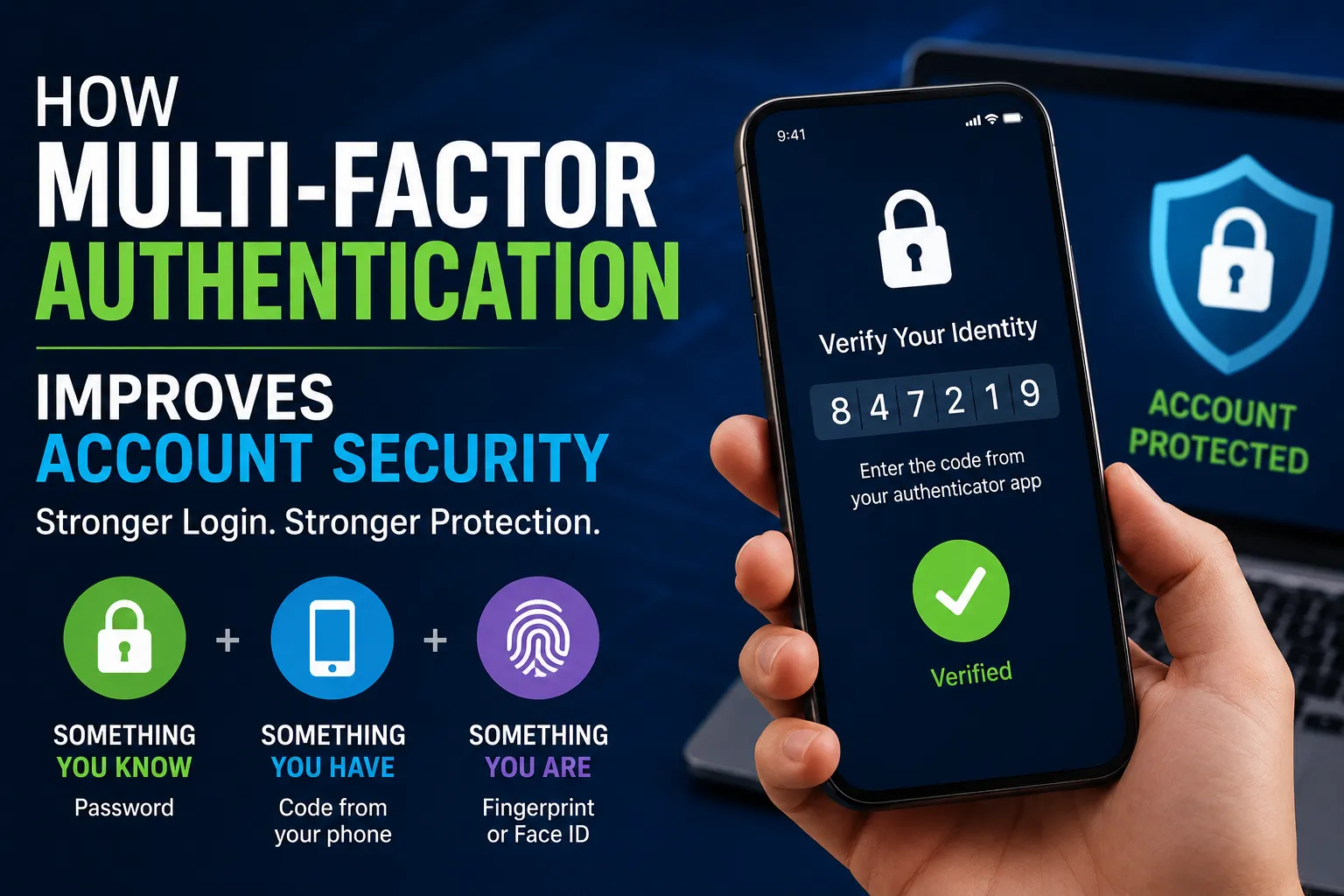
- Multi-factor authentication
Multi-factor authentication is particularly valuable because it can prevent a stolen password from being sufficient to access an account.
For example, an attacker might obtain someone’s password through phishing but still be unable to complete authentication without the additional factor.
Organizations should also consider whether endpoints meet security requirements before allowing them to access sensitive systems.
Endpoint Security and Phishing
Technology alone cannot eliminate every cybersecurity risk.
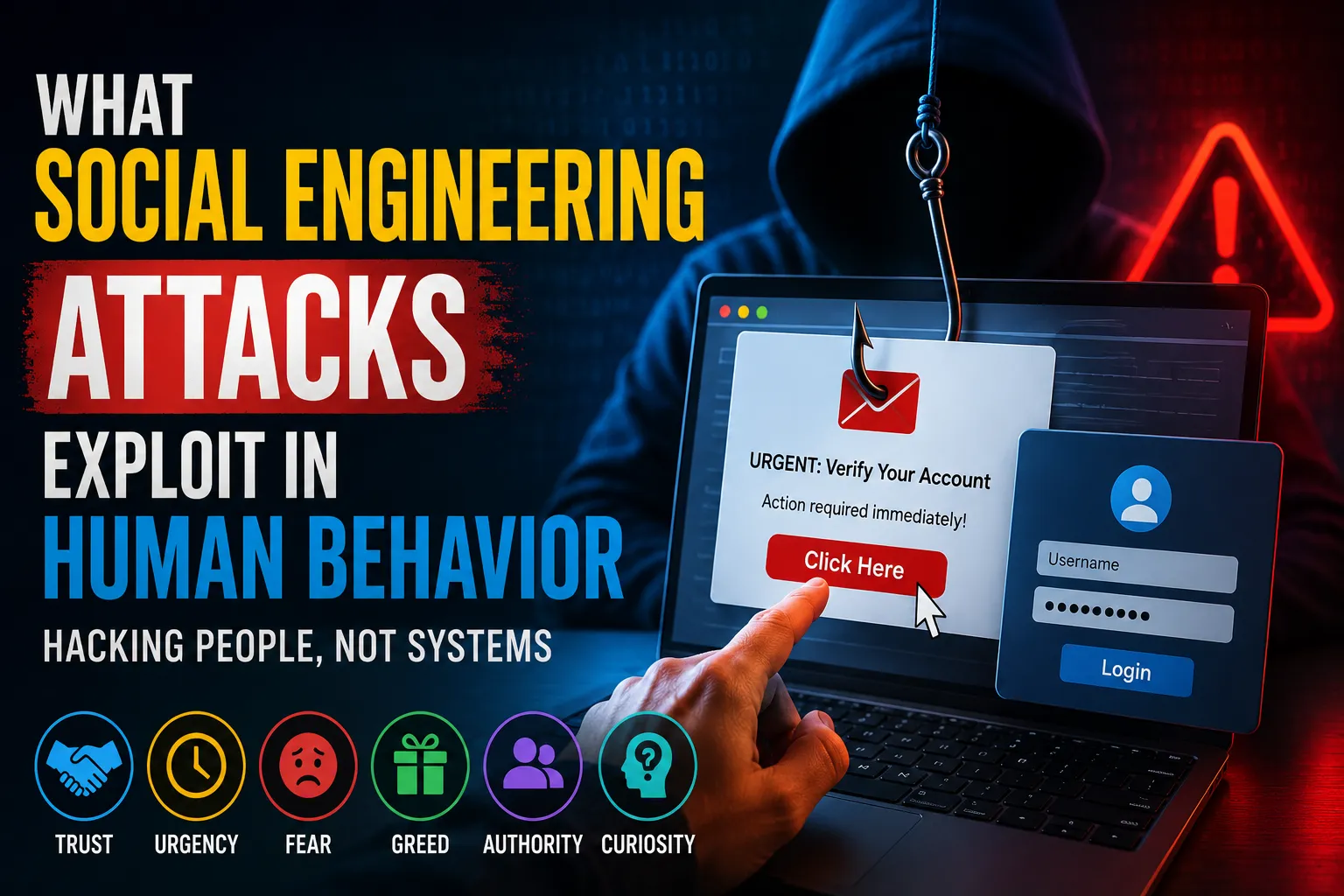
Phishing remains particularly important because attackers frequently attempt to persuade users to perform actions that undermine otherwise strong technical defenses.
A phishing message may encourage someone to:
- Click a malicious link
- Open an attachment
- Enter credentials
- Install software
- Transfer money
- Reveal confidential information
Endpoint security tools can sometimes detect malicious links or files, but user awareness remains an important part of defense.
The strongest endpoint security strategy combines technology with informed behavior.
Phishing is closely related to broader social-engineering techniques, in which attackers manipulate people rather than relying exclusively on technical vulnerabilities. Understanding the difference between these approaches is covered in Phishing Versus Social Engineering Explained.
Endpoint Detection and Response
Organizations increasingly use Endpoint Detection and Response (EDR) systems to monitor endpoint activity.
Rather than simply asking whether a file is malicious, EDR systems can collect information about what is happening on devices and help security teams investigate suspicious behavior.
Depending on the product and configuration, an EDR system may monitor:
- Processes
- Network connections
- File activity
- User activity
- System changes
- Application behavior
- Security events
If suspicious activity is detected, security teams may investigate the sequence of events to determine whether an attack is taking place.
EDR can also help security teams understand what happened during an incident. Instead of seeing only an alert that something suspicious occurred, investigators may be able to examine the activity that happened before and after the event.
Why Behavioral Detection Matters
Cyberattacks do not always involve obvious malicious files.
An attacker who obtains legitimate credentials may attempt to use normal administrative tools for harmful purposes.
This makes behavioral analysis valuable.
For example, an endpoint might suddenly begin:
- Accessing unusual resources.
- Creating unexpected processes.
- Making connections to unfamiliar destinations.
- Attempting to access large numbers of files.
- Changing security settings.
- Communicating with other devices in unusual ways.
Any single event may have a legitimate explanation. A combination of unusual behaviors can provide valuable evidence for security teams.
This type of monitoring is especially useful in environments where attackers attempt to blend into normal activity.
Endpoint Management Helps Organizations Stay Secure
Businesses may have hundreds or thousands of devices.
Manually checking every computer and smartphone is difficult.
Endpoint management platforms can help organizations maintain visibility over devices and enforce security policies.
Administrators may use centralized management to:
- Deploy security updates
- Configure device settings
- Enforce password requirements
- Manage applications
- Monitor device compliance
- Encrypt devices
- Remotely lock or erase certain devices
- Restrict access to organizational resources
Centralized management becomes particularly important when employees work from different locations.
It also helps organizations identify devices that are missing important security controls.
Protecting Remote Workers
Remote work has changed the endpoint security landscape.
An employee may connect to company systems from a home network, hotel, airport, coworking space, or mobile connection.
The organization may have less control over the surrounding network environment than it would in a traditional office.
Endpoint security helps shift some protection directly onto the device.
Important controls can include:
- Device encryption
- Secure authentication
- Endpoint detection
- Security updates
- Access controls
- Secure configuration
- Remote management
- Application restrictions
The goal is to maintain security even when the physical location of the device changes.
Endpoint protection should work alongside network defenses rather than replace them. Organizations can learn more about protecting communications and infrastructure in the Complete Guide to Network Security.
Zero Trust and Endpoint Security
Endpoint security also plays an important role in Zero Trust security models.
Zero Trust is based on the principle that access should not automatically be trusted simply because a device or user is inside a particular network.
Instead, systems can evaluate factors such as:
- User identity
- Device identity
- Device security status
- Application
- Location
- Requested resource
- Risk signals
A device that does not meet security requirements may be denied access or subjected to additional verification.
This approach is particularly useful for organizations with cloud services, remote employees, and distributed infrastructure.
What Happens When a Device Is Compromised?
Endpoint security also includes responding to incidents.
If a device appears compromised, security teams may need to:
- Isolate the device.
- Investigate suspicious activity.
- Determine what information may have been accessed.
- Remove malicious software.
- Reset affected credentials.
- Restore the device or systems if necessary.
- Check whether other devices were affected.
- Identify how the compromise occurred.
- Strengthen controls to prevent recurrence.
Rapid response can reduce the damage caused by an attack.
For businesses, an infected endpoint should not simply be ignored because the device itself appears to be functioning normally.
Endpoint incidents can also become larger cybersecurity events. Organizations should therefore have defined procedures for detecting, containing, investigating, and recovering from security incidents.
Common Endpoint Security Mistakes
Even organizations with security tools can make mistakes.
Relying Only on Antivirus Software
Antivirus protection is useful, but modern attacks can involve stolen credentials, malicious websites, legitimate administrative tools, social engineering, and vulnerabilities.
Endpoint security should therefore use multiple layers.
Delaying Software Updates
Known vulnerabilities can remain exploitable when patches are delayed unnecessarily.
Organizations should establish processes for identifying, testing, and deploying security updates.
Ignoring Mobile Devices
Smartphones often contain highly sensitive information but may receive less security attention than computers.
Mobile devices should be included in an organization’s security policies when they access business information.
Giving Applications Excessive Permissions
Users should regularly review which applications have access to sensitive device functions.
Unused or unnecessary permissions should be removed where appropriate.
Using Weak Authentication
A compromised password can expose an endpoint and the services connected to it.
Strong passwords and multi-factor authentication provide additional protection.
Endpoint Security and the Wider Cybersecurity Strategy
Endpoint protection should not exist in isolation.
A business cybersecurity program may also need to address:
- Network security
- Software security
- Data security
- Identity and access management
- Vulnerability management
- Malware protection
- Security monitoring
- Incident response
- Risk management
- Employee security awareness
These areas work together.
For example, an endpoint security system might detect suspicious software, while network monitoring identifies unusual communications and incident-response procedures determine how the organization should contain the event.
This layered approach is one reason endpoint security is best understood as part of a broader business cybersecurity architecture rather than as a standalone product.
Endpoint Security Is a Layered Defense
There is no single technology capable of eliminating every endpoint threat.
Effective protection typically combines multiple defensive layers:
Secure configuration → Authentication → Encryption → Updates → Malware protection → Monitoring → User awareness → Incident response
Each layer addresses different risks.
If one control fails, another may still limit the attack.
For example, a phishing attack might result in a stolen password. Multi-factor authentication could prevent that password from being enough to access an account. Endpoint monitoring could detect unusual activity, while network controls could limit communication with suspicious systems.
Security becomes stronger when these controls operate together.
How Individuals Can Improve Endpoint Security
Individuals do not need enterprise-grade security infrastructure to improve the protection of their computers and mobile devices.
Useful practices include:
- Keep operating systems and applications updated.
- Use strong, unique passwords.
- Enable multi-factor authentication where available.
- Install applications from trusted sources.
- Review application permissions.
- Use device encryption when available.
- Avoid suspicious links and attachments.
- Lock devices when they are unattended.
- Back up important information.
- Remove applications and software that are no longer needed.
- Use reputable security protections.
- Be cautious when connecting to unfamiliar networks or devices.
These steps reduce common opportunities for attackers.
How Businesses Can Strengthen Endpoint Protection
Organizations generally need more extensive controls because their endpoints connect to business systems and contain information belonging to employees, customers, and the organization itself.
A business endpoint-security program can include:
Centralized Device Management
Organizations should maintain visibility over which devices connect to company resources and whether those devices meet security requirements.
Security Monitoring
Security teams need mechanisms for identifying unusual endpoint behavior and investigating potential threats.
Access Controls
Users and devices should receive only the access required for legitimate business activities.
Vulnerability Management
Organizations should identify known weaknesses and prioritize remediation according to risk.
Data Protection
Sensitive information stored on endpoints should receive appropriate protection, including encryption and access controls.
Incident Response
Businesses should have defined procedures for handling compromised devices and determining whether an endpoint incident has affected other systems.
Employee Security Awareness
Employees should understand common threats such as phishing, malicious downloads, credential theft, and social engineering.
Together, these controls create a more resilient endpoint environment.
The Growing Importance of Endpoint Protection
As computing becomes increasingly distributed, endpoints are becoming central components of cybersecurity.
Employees access cloud applications from laptops. Consumers manage finances from smartphones. Businesses use tablets and connected devices in daily operations. Remote workers connect from locations far outside traditional corporate networks.
This means security increasingly has to travel with the user and the device.
Protecting the endpoint is therefore not simply about preventing malware. It is about protecting identities, data, applications, communications, and access to wider digital systems.
The endpoint has effectively become part of the security perimeter.
Building Safer Computers and Mobile Devices
Strong endpoint security begins with basic practices and builds upward.
For individual users, keeping software updated, using strong authentication, enabling device encryption, reviewing application permissions, maintaining backups, and remaining cautious about suspicious messages can significantly improve protection.
Organizations need additional controls, including centralized device management, security monitoring, access policies, incident-response procedures, vulnerability management, and regular security assessments.
The underlying principle is simple:
Every connected device should be treated as an important part of the security environment.
Why Endpoint Security Is a Fundamental Security Layer
Computers and mobile devices have evolved from standalone tools into gateways to enormous digital ecosystems. A single device can provide access to email, financial accounts, cloud storage, business applications, personal communications, and sensitive data.
That makes endpoint protection one of the fundamental layers of modern cybersecurity.
The most effective approach combines technical safeguards with responsible user behavior. Encryption can protect stored information, authentication can restrict access, updates can close known vulnerabilities, security software can identify threats, and monitoring can help detect suspicious activity.
No individual control is perfect.
Together, however, these defenses can make it substantially harder for attackers to compromise a device and turn it into a gateway to something more valuable.
For organizations building a broader security program, endpoint protection should be considered alongside the other major cybersecurity disciplines covered in the Ultimate Guide to Business Cybersecurity.