Cybersecurity for Businesses
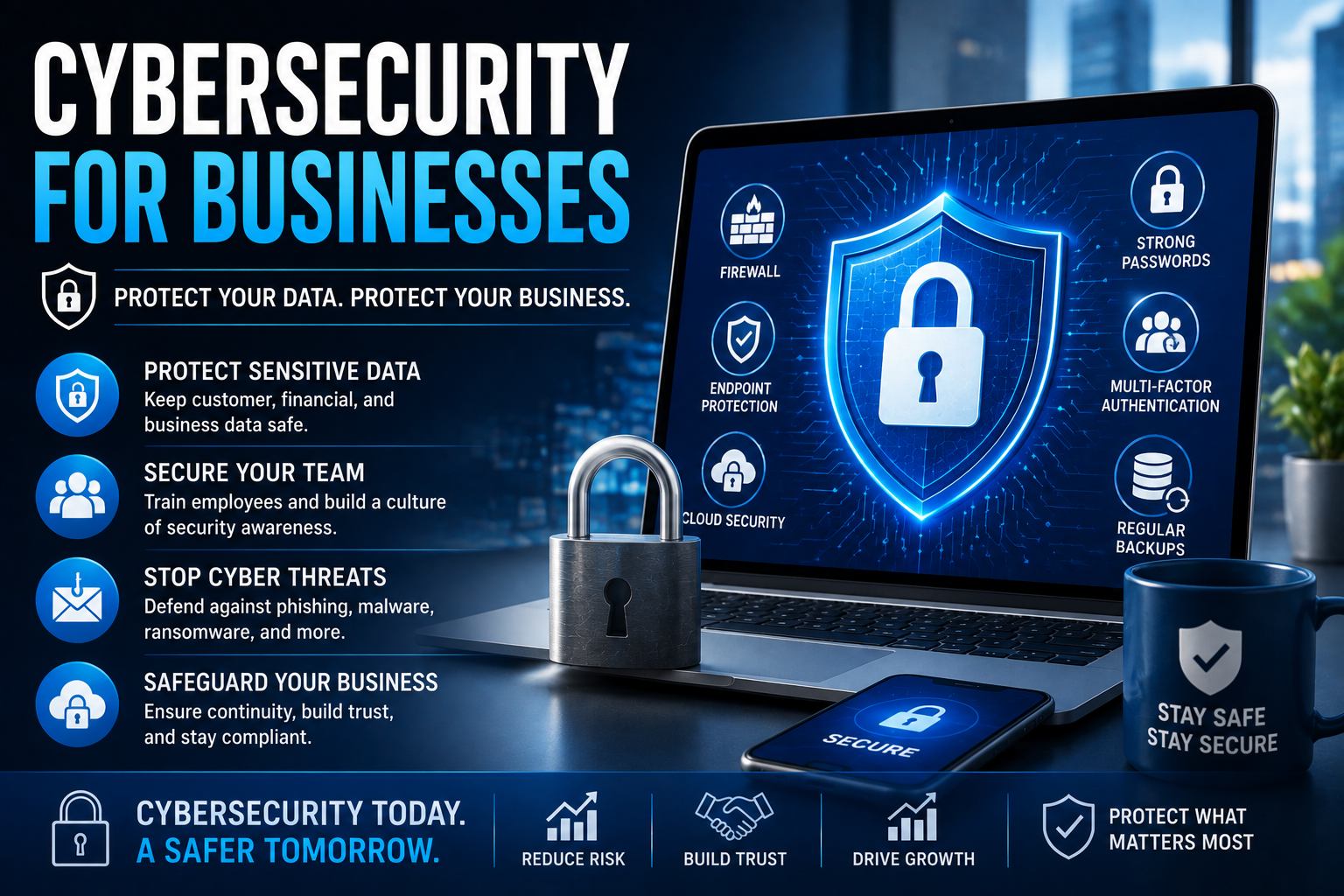
As businesses become increasingly digital, cybersecurity has evolved from an IT concern into a core business priority. From customer databases and financial records to cloud services and remote work environments, organizations depend on technology to operate efficiently. However, this growing reliance on digital systems has also expanded opportunities for cybercriminals.
Cyberattacks can disrupt operations, damage reputations, expose sensitive information, and result in significant financial losses. Fortunately, businesses can reduce these risks by implementing strong cybersecurity practices, educating employees, and maintaining a proactive security strategy.
This guide explores the fundamentals of business cybersecurity, common threats, and practical steps organizations can take to strengthen their digital defenses.
What Is Business Cybersecurity?
Business cybersecurity refers to the policies, technologies, and practices used to protect an organization’s digital assets from unauthorized access, cyberattacks, and data breaches.
It focuses on securing:
- Business networks
- Computers and mobile devices
- Customer information
- Financial records
- Cloud services
- Email systems
- Business applications
- Intellectual property
Cybersecurity helps ensure that information remains confidential, accurate, and accessible when needed.
Why Cybersecurity Matters
Modern businesses store and process vast amounts of valuable information.
Strong cybersecurity helps organizations:
- Protect customer trust
- Prevent financial losses
- Maintain business continuity
- Safeguard intellectual property
- Comply with regulations
- Reduce downtime
- Protect company reputation
- Support long-term growth
For many organizations, cybersecurity is now a critical component of overall business resilience.
Common Cyber Threats Facing Businesses
Understanding common threats is the first step toward effective protection.
Phishing Attacks
Phishing uses deceptive emails, messages, or websites to trick employees into revealing sensitive information or installing malicious software.
Phishing is closely related to social engineering attacks, which exploit human behavior to manipulate people into taking actions that benefit an attacker.
Common signs include:
- Urgent requests
- Fake login pages
- Unexpected attachments
- Suspicious links
- Requests for confidential information
Employee awareness is one of the strongest defenses.
Businesses should also understand the distinction between phishing and social engineering so employees can recognize different forms of manipulation.
Ransomware
Ransomware is malicious software that encrypts files or systems, preventing access until a ransom is demanded.
Ransomware is one of the major categories covered in the complete guide to malware and malicious software.
Potential consequences include:
- Operational disruption
- Data loss
- Financial costs
- Reputational damage
Regular backups and strong security controls can help reduce the impact of ransomware incidents.
Malware
Malware is software designed to damage systems, steal information, or disrupt business operations.
Types include:
- Viruses
- Worms
- Trojans
- Spyware
- Adware
For a broader explanation of malicious software and the different forms it can take, see the complete guide to malware and malicious software.
Keeping systems updated and using reputable security software can help prevent infections.
Insider Threats
Not every cybersecurity incident originates outside the organization.
Insider risks may involve:
- Human error
- Accidental data exposure
- Misconfigured systems
- Unauthorized access
- Malicious insiders
Appropriate access controls and employee training help reduce these risks.
A strong identity and access security strategy can help organizations control who can access systems, applications, and sensitive information.
Business Email Compromise
Cybercriminals may impersonate executives, suppliers, or business partners to request fraudulent payments or sensitive information.
Organizations should verify unusual financial requests through established communication channels.
Build a Strong Cybersecurity Strategy
Effective cybersecurity combines technology, policies, and employee awareness.
A comprehensive strategy typically includes:
- Risk assessments
- Security policies
- Employee training
- Regular software updates
- Data backup procedures
- Incident response planning
- Continuous monitoring
Businesses should incorporate cybersecurity risk management into broader organizational planning so security decisions are based on identified threats, potential impact, and appropriate controls.
Security should be viewed as an ongoing business process rather than a one-time project.
Secure Business Networks
A secure network forms the foundation of business cybersecurity.
Recommended practices include:
- Use secure Wi-Fi networks.
- Change default passwords.
- Segment critical systems.
- Monitor network activity.
- Configure firewalls appropriately.
- Restrict unnecessary access.
Organizations can explore these principles in the complete guide to network security, which covers the broader practices used to protect connected systems and network infrastructure.
Regular network reviews help identify vulnerabilities before attackers do.
Protect Business Data
Data is often one of a company’s most valuable assets.
Businesses should:
- Encrypt sensitive information.
- Limit data access based on job responsibilities.
- Back up important files regularly.
- Secure cloud storage.
- Dispose of old devices securely.
A broader data security strategy helps organizations protect information from unauthorized access, loss, alteration, and other risks.
Encryption provides another important layer of protection. Businesses can learn more about the technologies behind it in the complete guide to encryption and cryptography.
Protecting customer and business information strengthens both security and trust.
Strengthen Password Security
Weak passwords remain a common cause of security incidents.
Best practices include:
- Use long, unique passwords.
- Avoid password reuse.
- Store passwords securely using a password manager.
- Update compromised credentials promptly.
Businesses can develop stronger credential practices by following this password security guide.
Password policies should balance security with usability.
Enable Multi-Factor Authentication
Multi-factor authentication (MFA) adds an additional verification step beyond passwords.
Examples include:
- Authentication apps
- Security keys
- One-time verification codes
- Biometric authentication
Businesses can learn more about this additional layer of protection in the guide to multi-factor authentication.
MFA significantly reduces the likelihood of unauthorized account access.
Keep Software Updated
Software updates often include important security improvements.
Businesses should regularly update:
- Operating systems
- Business applications
- Web browsers
- Security software
- Network equipment
- Mobile devices
Prompt patching helps close known security vulnerabilities.
Organizations should also maintain a broader vulnerability management process to identify, prioritize, and address security weaknesses across their environments.
Train Employees
Employees play a central role in organizational cybersecurity.
Training should cover:
- Recognizing phishing attempts
- Password security
- Safe internet browsing
- Handling sensitive information
- Reporting suspicious activity
- Mobile device security
Regular education helps build a security-conscious workplace culture.
Employees can also benefit from broader guidance on staying safe in the digital world, particularly when business and personal technology overlap.
Prepare an Incident Response Plan
No organization can eliminate every cybersecurity risk.
An incident response plan helps businesses:
- Detect incidents quickly
- Limit damage
- Restore operations
- Communicate effectively
- Preserve evidence
- Improve future preparedness
A dedicated incident response guide explains how organizations can prepare for and respond to cybersecurity events.
Regular testing ensures the plan remains effective.
Secure Remote Work
Many organizations now support hybrid or remote work environments.
Remote work security may include:
- Secure VPN connections
- Company-managed devices
- Device encryption
- Multi-factor authentication
- Secure cloud collaboration
- Updated endpoint protection
Organizations should also consider the security of laptops, smartphones, tablets, and other devices through a broader computer and mobile device security strategy.
Clear security policies help protect distributed teams.
Back Up Critical Information
Reliable backups are essential for business continuity.
Effective backup practices include:
- Regular automated backups
- Multiple backup locations
- Offline or isolated backup copies
- Routine restoration testing
Backups help organizations recover more quickly after hardware failures, accidental deletion, or ransomware attacks.
Monitor and Audit Systems
Continuous monitoring allows businesses to identify unusual activity early.
Organizations should regularly review:
- Login attempts
- Network traffic
- System logs
- User permissions
- Software inventory
- Security alerts
Security operations teams use monitoring and detection processes to identify suspicious activity across systems and networks. Businesses can explore this area in the guide to security operations and cybersecurity threat detection.
Routine audits support ongoing improvement.
Cybersecurity Trends Shaping Business
Business cybersecurity continues evolving alongside technology.
Key developments include:
- Artificial intelligence for threat detection
- Zero Trust security models
- Cloud-native security
- Identity-based access management
- Behavioral analytics
- Automated security monitoring
Artificial intelligence is changing both cybersecurity defenses and the threats organizations need to consider. The guide to cybersecurity in the AI era explores how this changing technology landscape affects digital security.
Organizations increasingly combine automation with skilled security professionals to respond to modern threats.
Common Cybersecurity Mistakes
Businesses can reduce risk by avoiding these common errors:
- Reusing passwords
- Ignoring software updates
- Poor employee training
- Weak backup strategies
- Excessive user permissions
- Lack of incident planning
- Assuming small businesses are not targets
Every organization, regardless of size, can benefit from strong cybersecurity practices.
Looking Ahead
Cybersecurity is no longer optional—it is a fundamental requirement for operating in today’s digital economy. As businesses adopt cloud computing, artificial intelligence, connected devices, and remote work technologies, the need for robust security measures will only continue to grow.
Organizations that invest in cybersecurity, employee education, and proactive risk management are better positioned to protect their operations, customers, and reputation while maintaining resilience in an increasingly connected world.
Frequently Asked Questions
What is business cybersecurity?
Business cybersecurity involves protecting an organization’s systems, networks, data, and digital assets from cyber threats, unauthorized access, and data breaches.
Why are small businesses targeted?
Small businesses often have valuable customer data and may have fewer security resources, making them attractive targets for cybercriminals.
What is multi-factor authentication?
Multi-factor authentication requires users to verify their identity using two or more methods, adding an extra layer of security beyond passwords.
How often should businesses update software?
Software should be updated as soon as practical after security patches become available, following appropriate testing where necessary.
What is the biggest cybersecurity risk for businesses?
Risks vary by organization, but phishing attacks, ransomware, weak passwords, and human error remain among the most common cybersecurity challenges.
Key Takeaways
- Cybersecurity is essential for protecting business operations, customer data, and organizational reputation.
- Businesses face evolving threats including phishing, ransomware, malware, and insider risks.
- Strong passwords, multi-factor authentication, regular updates, and employee training significantly improve security.
- Reliable backups and incident response planning help organizations recover from security incidents.
- Continuous monitoring and proactive risk management strengthen long-term resilience.
- Cybersecurity is an ongoing business responsibility that supports sustainable growth and customer trust.