What Social Engineering Attacks Exploit in Human Behavior
Cybersecurity is often associated with sophisticated malware, vulnerable software and complex hacking techniques. Yet some of the most effective attacks do not require criminals to break through a technical security system at all.
Instead, they target something much harder to patch: human behavior.
Social engineering attacks manipulate people into revealing information, approving transactions, clicking malicious links, granting access or taking other actions that compromise security. Rather than relying exclusively on technical vulnerabilities, attackers exploit emotions, habits, trust and cognitive shortcuts.
Understanding these psychological tactics is one of the most useful ways individuals and organizations can reduce their exposure to cyber threats. It is also an important part of building a broader security strategy, because business cybersecurity depends on both technical controls and the people who use them.
What Is Social Engineering?
Social engineering is the use of deception and psychological manipulation to influence someone into taking an action that benefits an attacker.
The attacker may pretend to be a colleague, bank employee, delivery company, government representative, technical-support agent or another trusted person or organization.
The goal can vary widely. An attacker might attempt to:
-
Steal passwords
-
Obtain financial information
-
Gain access to an account
-
Install malicious software
-
Divert a payment
-
Collect personal information
-
Gain access to a company’s systems
-
Impersonate an employee
-
Gather information for a larger attack
The defining characteristic is manipulation.
Instead of asking, “How can I technically defeat this security system?”, the attacker may ask, “How can I persuade someone to bypass it for me?”
This makes social engineering an important consideration when organizations design security policies, access controls and employee security practices.
Social engineering also has an important connection to privacy because information exposed through online profiles, communications and other digital activities can give attackers material to make their deception more convincing. The broader Online Privacy Guide explains how personal information can be protected in an increasingly connected environment.
Why Human Behavior Is Such an Attractive Target
Technology can be protected with authentication systems, encryption, firewalls, antivirus software and security updates.
People are different.
Humans make decisions based on incomplete information, emotion, social expectations and time pressure. Attackers understand this and construct situations designed to make a victim react before thinking carefully.
A fraudulent message may not need to be technically sophisticated if it creates enough urgency.
A fake employee may not need to defeat a security system if a real employee willingly provides the requested information.
This is why cybersecurity awareness remains important even when an organization has strong technical defenses.
Social engineering also demonstrates why security cannot be treated as a single technology or product. Effective protection requires multiple layers working together, from secure software and access controls to employee awareness and incident response.
Trust Is One of the Biggest Weaknesses Attackers Exploit
People naturally trust familiar institutions and individuals.
An email appearing to come from a manager can seem legitimate. A phone call claiming to be from a bank may initially sound credible. A message from someone using a colleague’s name can encourage a recipient to lower their guard.
Attackers exploit this tendency by creating believable identities and scenarios.
They may research an organization, discover employee names, examine public social-media profiles or gather information from company websites before making contact.
The more convincing the context, the easier it can be to create the impression that a request is legitimate.
How to Respond
Do not treat familiarity as proof of identity.
If a request involves sensitive information, money, passwords or unusual access, verify it through an independent communication channel.
For example, if someone sends an urgent payment request by email, contact the person using a known phone number or established internal communication method rather than replying directly to the suspicious message.
This principle is particularly important for businesses because impersonation can be combined with other attacks, including phishing and account compromise.
Urgency Can Override Careful Thinking
One of the most common social engineering tactics is creating a sense of urgency.
Messages might claim:
-
“Your account will be closed today.”
-
“Your payment requires immediate confirmation.”
-
“Your password has expired.”
-
“Your package cannot be delivered.”
-
“The company’s account needs to be updated immediately.”
The objective is to reduce the amount of time a person spends evaluating the request.
When people believe something must be handled immediately, they may skip normal verification procedures.
The attacker benefits from that rushed decision.
Slow Down When a Message Feels Urgent
Urgency should be a reason to verify, not a reason to abandon normal security procedures.
Take a moment to ask:
-
Was I expecting this request?
-
Does the sender’s identity make sense?
-
Is the requested action normal?
-
Is there another way to verify the request?
-
What happens if I do nothing for a few minutes and verify first?
A legitimate emergency does not automatically make normal security procedures unnecessary.
Organizations can reinforce this behavior by creating clear procedures for unusual payments, account changes and requests for sensitive information.
Fear Can Make People Act Without Checking
Fear is another powerful psychological trigger.
An attacker might claim that an account has been compromised, a payment is overdue or a legal problem will occur unless the recipient takes immediate action.
Fear narrows attention.
Instead of evaluating the entire situation, the victim may focus on eliminating the perceived threat as quickly as possible.
This is particularly effective when the attacker impersonates an authority figure or trusted institution.
The safest response is to separate the emotional message from the requested action.
Ask yourself: What evidence proves that this threat is real?
Then verify the claim independently.
Authority Can Influence Decisions
People tend to give greater weight to requests from individuals perceived to have authority.
Attackers can exploit this by impersonating:
-
Managers
-
Executives
-
IT administrators
-
Bank employees
-
Police officers
-
Government officials
-
Account administrators
-
Security personnel
An employee might hesitate to question a request that appears to come from a senior executive.
This creates opportunities for business email compromise and other impersonation-based scams, particularly when the request involves payments, confidential information or account access.
Organizations can reduce this risk by establishing procedures that require independent verification for sensitive requests, regardless of the apparent seniority of the person making the request.
Curiosity Can Become a Security Risk
Not every attack relies on fear or urgency.
Some exploit curiosity.
A message may promise:
-
An unexpected document
-
A shocking photograph
-
An exclusive opportunity
-
Confidential information
-
A surprising announcement
-
A free reward
The temptation to find out what is behind the message can encourage someone to click a link or open an attachment without considering the security implications.
Curiosity is normal human behavior. The goal is not to eliminate it but to recognize when someone may be deliberately using it to manipulate you.
Greed and the Promise of Rewards
People are also naturally attracted to opportunities that appear unusually valuable.
Scammers may promise prizes, discounts, investment opportunities, refunds, bonuses or other financial benefits.
A message that seems to offer something valuable can make people overlook warning signs.
One useful rule is to be especially cautious when an unexpected opportunity requires you to provide sensitive information, send money or act immediately.
If the reward sounds unusually good and the process feels unusually urgent, skepticism is justified.
Reciprocity Can Be Manipulated
People often feel compelled to return favors.
This psychological tendency can be exploited by attackers.
Someone may offer assistance first and then request information in return. A fake support agent might claim to have solved a problem and subsequently ask the victim to provide a password or verification code.
The victim may feel uncomfortable refusing because the attacker has created the impression that a favor has already been provided.
The important distinction is that legitimate assistance does not normally require handing over credentials that should remain private.
Familiarity Makes Suspicious Requests Easier to Accept
Repeated exposure can make something feel more trustworthy.
An attacker may communicate with a target multiple times before making a malicious request. By establishing familiarity, the attacker can make the eventual request appear less unusual.
This can be particularly dangerous in workplace environments.
Someone might begin with harmless conversations and gradually collect information about the organization’s processes, employees or technology.
This is one reason employees should avoid sharing unnecessary sensitive information with unknown contacts, even when individual conversations appear harmless.
Social Proof Can Create False Confidence
People often look to others when deciding whether something is legitimate.
Attackers can exploit this by creating the impression that other people have already trusted them.
A fraudulent website may display fake testimonials. A scammer may claim that “everyone on the team has already completed this.” A phishing message might appear to be part of an ongoing conversation involving multiple people.
The implication is simple: others have accepted this, so you should too.
But popularity or apparent consensus is not evidence of legitimacy.
Sensitive requests should be independently verified rather than accepted because they appear socially normal.
Familiar Technology Can Create a False Sense of Security
Attackers increasingly imitate legitimate digital services.
A fraudulent login page may resemble a familiar cloud service. A fake notification may imitate a company’s security system. A malicious message may use logos, colors and language associated with a trusted organization.
Visual familiarity can make people less suspicious.
However, the appearance of a website or email is not proof of authenticity.
Users should pay attention to the actual domain, unexpected requests, unusual login prompts and other contextual clues.
Phishing Is a Classic Example of Social Engineering
Phishing is one of the most recognizable forms of social engineering.
Attackers send deceptive messages designed to persuade recipients to click links, provide information, download files or perform other actions.
Phishing can occur through:
-
Email
-
Text messages
-
Social media
-
Messaging applications
-
Fake websites
-
Online advertisements
-
Phone calls
More targeted attacks are sometimes referred to as spear phishing, where the attacker tailors the message to a particular person or organization.
The more information an attacker has about the target, the more convincing the deception can become.
For a broader explanation of how these attacks differ and how phishing fits within the larger category of social engineering, see Phishing Versus Social Engineering Explained.
Pretexting Creates an Entire False Story
Pretexting involves creating a fabricated scenario to persuade someone to provide information or take an action.
For example, an attacker might claim to be conducting an internal security check and ask an employee to confirm account details.
The individual story may sound plausible because it contains enough contextual information to appear legitimate.
The defense is not simply memorizing common scam messages. It is developing a habit of verifying identity and authorization before providing sensitive information.
Baiting Exploits the Promise of Something Interesting
Baiting involves offering something appealing in exchange for an action.
The bait could be digital or physical.
An attacker might offer a free download, tempting file or other seemingly valuable resource. In some scenarios, physical devices can also be used to tempt someone into connecting unfamiliar hardware to a computer.
The underlying psychological principle is simple: the victim is encouraged to focus on the promised benefit rather than the potential security risk.
Tailgating Exploits Social Courtesy
Not all social engineering happens online.
Tailgating, sometimes called piggybacking, involves gaining physical access to a restricted area by taking advantage of another person’s willingness to help.
An attacker might attempt to enter a secure building behind an employee or create a situation where someone feels socially obligated to hold a door open.
Security-conscious organizations need to recognize that physical access can be just as important as digital authentication.
A friendly interaction should not automatically override access-control procedures.
Attackers Can Exploit Fatigue and Distraction
People do not make decisions the same way when they are rested and focused as they do when they are tired, busy or distracted.
Attackers can benefit from this.
An employee receiving an urgent request late at night may be more likely to act quickly. Someone handling dozens of messages during a busy workday may overlook an unusual detail.
This is one reason organizations should design security processes that remain simple and effective even when employees are under pressure.
Security should not depend entirely on perfect attention.
Information Shared Online Can Help Attackers
Social engineering often begins with information gathering.
Publicly available details can reveal:
-
Job titles
-
Names of colleagues
-
Organizational structures
-
Travel plans
-
Professional relationships
-
Software platforms
-
Company projects
-
Personal interests
None of these pieces of information may seem dangerous individually.
But attackers can combine them to construct highly convincing stories.
This does not mean people should avoid using social media or professional networks. It does mean they should think carefully about how much sensitive information they publicly expose.
For businesses, controlling unnecessary exposure is one component of a wider approach to business cybersecurity.
Strong Security Habits Reduce the Impact of Manipulation
Technology can help limit the consequences of social engineering, but human behavior remains important.
Several practices can make attacks considerably harder to succeed.
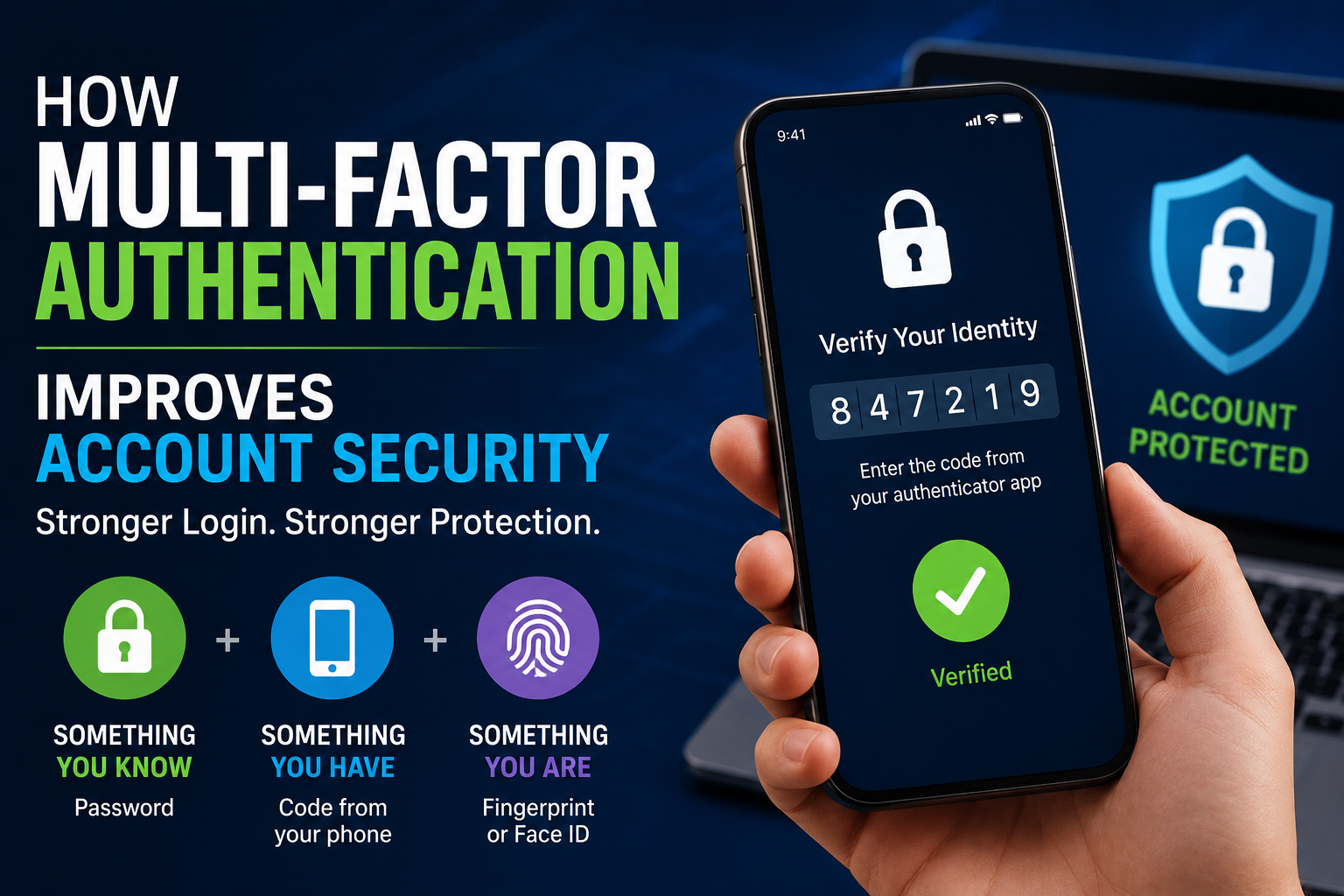
Use multifactor authentication
Multifactor authentication adds another verification step beyond a password.
Even if an attacker obtains a password, an additional authentication requirement can make unauthorized access more difficult.
For a deeper look at how this additional layer protects accounts, see How Multi-Factor Authentication Improves Account Security.
Never share authentication codes
Unexpected requests for one-time passwords or authentication codes should receive particular scrutiny.
A legitimate service generally does not need you to tell another person the security code that was sent to your device.
Verify unusual requests independently
If a request involves money, sensitive information or privileged access, verify it using a trusted channel.
Do not rely solely on contact information contained in the suspicious message.
Use password managers
Password managers can make it easier to use unique passwords across different accounts and can reduce the temptation to reuse credentials.
A strong password strategy is another important layer of protection, particularly when social engineering attempts are designed to steal login credentials. The Password Security Guide covers password management, authentication and related account-protection practices in greater detail.
Keep software updated
Security updates can address technical vulnerabilities that attackers might otherwise exploit alongside social engineering techniques.
Report suspicious messages
Reporting suspicious activity can help organizations identify broader campaigns and protect other employees.
Organizations Need More Than Annual Security Training
Security awareness should not be treated as a once-a-year presentation.
Organizations can reinforce good behavior through:
-
Regular security education
-
Clear reporting procedures
-
Multifactor authentication
-
Least-privilege access
-
Payment verification processes
-
Password managers
-
Technical email protections
-
Incident-response plans
-
Realistic security exercises
Most importantly, employees should feel comfortable reporting mistakes.
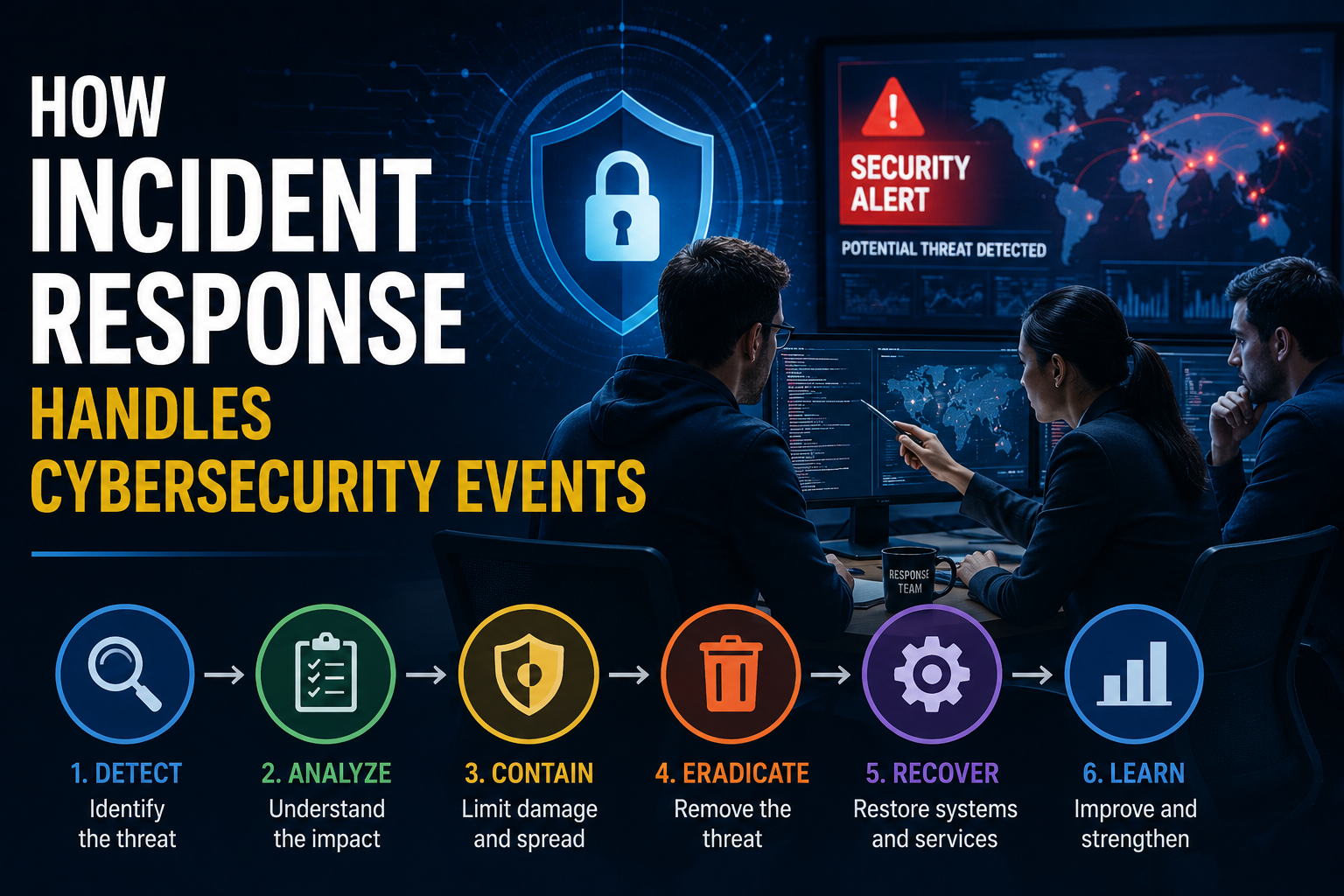
If someone clicks a malicious link but immediately reports it, the organization may have an opportunity to contain the incident.
If employees fear punishment, they may hide mistakes until the damage becomes much harder to control.
Security awareness should therefore be part of the broader organizational security culture rather than an isolated training activity.
The Goal Is Not to Eliminate Human Error
Human beings will make mistakes.
No security strategy can realistically assume that every employee, customer or family member will identify every deceptive message correctly.
The better objective is to build multiple layers of protection.
A suspicious message might get past an email filter. A user might click the link. Multifactor authentication can still prevent account takeover. Access controls can limit what the compromised account can reach. Monitoring can identify unusual activity.
This layered approach recognizes an important reality: people are part of cybersecurity, but they should not be the only security control.
This is the same defense-in-depth principle that should guide a broader business cybersecurity strategy.
Learning to Recognize the Emotional Trigger
One of the most useful ways to defend against social engineering is to recognize the emotion an attacker is trying to create.
Before responding to an unexpected request, ask:
What is this message trying to make me feel?
Is it creating fear?
Urgency?
Excitement?
Curiosity?
Obligation?
Respect for authority?
If the emotional reaction is unusually strong, pause before acting.
That brief pause can interrupt the manipulation and give rational evaluation a chance to take over.
The Human Layer of Cybersecurity Matters
Social engineering works because attackers understand that cybersecurity is ultimately connected to human decision-making.
Passwords can be stolen. Accounts can be impersonated. Messages can be forged. But the attack often succeeds only when someone is persuaded to take the final step.
The strongest defense is therefore not suspicion of everything. It is healthy skepticism combined with consistent verification.
Slow down when a request feels urgent. Question unexpected demands for sensitive information. Verify identities independently. Protect authentication credentials. Be cautious about what information is publicly available. And make it easy to report suspicious activity.
Technology will continue to become more sophisticated, and attackers will continue developing more convincing ways to imitate trusted people and organizations. As that happens, understanding the psychological side of cybersecurity will become just as important as understanding the technical side.
The most valuable security habit may be remarkably simple: when something is designed to make you react immediately, give yourself permission to stop and think first.